
The Chemistry Classroom prepares you for success!
   | Introduction
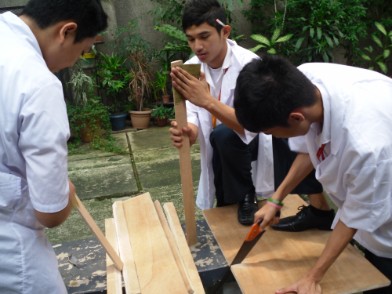
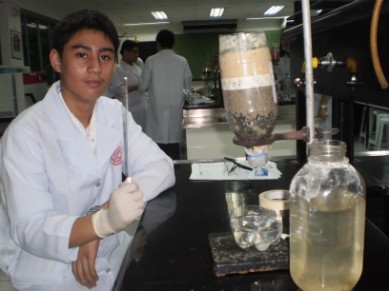
Chemistry and Research with Introduction to Physics for the third year high school exemplifies the main function of chemistry in the industry, consumer, society and the environment. Classroom activities enhance the knowledge and comprehension of the basic concepts of chemistry and its applications. Student experiments are designed to develop their process skills by the use of Inquiry Learning and Practical Approach that encourage students’ understanding of the scientific endeavor and their excitement and enjoyment in its pursuit. It draws upon and builds onto the knowledge and understanding, skills, values and attitudes developed in First Year Science (Integrated Physical Science). It further develops students’ understanding of science as a continually developing body of knowledge, the role of experiment in deciding between competing theories, the provisional nature of scientific explanations, the interdisciplinary nature of science, the complex relationship between evidence and ideas and the impact of science on society. The study of Chemistry involves the students working individually and with others in practical, field and interactive media experiences related to the theoretical concepts considered in the course. It is expected that students studying Chemistry will apply investigative and problem-solving skills, effectively communicate the theoretical concepts considered in the course and appreciate the contribution that a study of Chemistry makes to our understanding of the world. Tangible and challenging activities help provide students with more knowledge about the world around them and how they can help their own community. These learning activities utilize Understanding by Design (UBD), Technical-Vocational Teaching Approach (TVTA), Problem-Based Learning (PBL) and Service Learning Approach. Research experience enables students to gain hands-on expertise in basic and advanced research techniques prior to their higher education, to become involved in leading-edge research, and to develop a portfolio of skills extending beyond the classroom. Scientific research is a course in which the CSA student conducts an in-depth research project and presents his or her findings. It also promotes understanding and appreciation of scientific breakthroughs. Two major components of the course are: a technical report including sections for literature search, experiment design, procedures, analysis of data, experimental results, conclusions, and future directions and an audio-visual presentation that is appropriate to the nature of the research and the type of audience.The PULL OUT Program of CRIP is designed to attain a depth of understanding of fundamentals and a reasonable competence in dealing with chemical problems. It contributes to the development of the students' abilities to think clearly and to express their ideas, orally and in writing, with clarity and logic. The program focuses on the importance of the theoretical aspects of chemistry has brought about an increasing emphasis on Chemistry of Consumer Products, Food Chemistry and Technology, and Industrial Chemistry. Basic concepts and skills set opportunities for the students to practice intellectual skills that will make them aware of their role as Christian leaders endowed with the Augustinian values and able to establish peace and unity among themselves. |
